WORD HUNT (Let’s
take a look and Discover…….. )
E
|
X
|
P
|
O
|
S
|
U
|
R
|
E
|
P
|
A
|
U
|
F
|
X
|
A
|
Z
|
X
|
V
|
C
|
H
|
R
|
O
|
N
|
I
|
C
|
D
|
C
|
T
|
T
|
H
|
A
|
B
|
X
|
I
|
S
|
E
|
R
|
A
|
U
|
P
|
O
|
G
|
A
|
H
|
J
|
S
|
D
|
B
|
L
|
E
|
T
|
O
|
X
|
I
|
C
|
O
|
L
|
O
|
G
|
Y
|
O
|
L
|
E
|
X
|
I
|
D
|
P
|
Y
|
H
|
N
|
T
|
O
|
H
|
Q
|
P
|
Z
|
N
|
H
|
B
|
R
|
O
|
S
|
H
|
E
|
O
|
O
|
V
|
E
|
R
|
D
|
O
|
S
|
A
|
G
|
E
|
M
|
C
|
V
|
R
|
Q
|
L
|
M
|
D
|
A
|
N
|
O
|
I
|
S
|
L
|
C
|
B
|
W
|
R
|
E
|
P
|
E
|
A
|
T
|
E
|
D
|
A
|
There
are many words that could be found in the box above. If you were able to hunt
or found all of the 10 words, give yourself a big hand! (bravo! :D) Now, maybe you are
wondering what these words would mean in relation to my new blog.
 |
| Photo Credit: TOXIC |
What comes into
your mind when you see this picture? A human skull with two bones attached to
it, which generally symbolizes the word TOXIC.
TOXICOLOGY
Is
the study of poisons or commonly known as toxins. We may be exposed to these
toxic agents in many different ways. It may either be intentional, accidental
or occupational exposures.
You can watch this video to know more about how toxins are acquired
and how will it affects our body :) Toxins in the body.
The study of toxicology is not merely about the presence of
toxins or poisons in the body but also its effect on the body systems, diagnostic
testing and interventions to counteract or resolve the problem caused by these
toxic agents. There are four major disciplines/divisions within toxicology:
 |
| Photo credit: Mechanistic |
1. Mechanistic Toxicology
It explains the cellular and molecular mechanisms involved in the individual expression of toxic effects. Rational therapy design was provided through this study and the different tests were developed in order to assess the degree of exposure of the poisoned individuals.
| Photo Credit: Animals |
2. Descriptive Toxicology
Risk Assessment is a procees in descriptive toxciology which involves
testing of animals with certain toxins to determine the possible level of
exposure that will cause harm to individuals in relation to the animal tested.
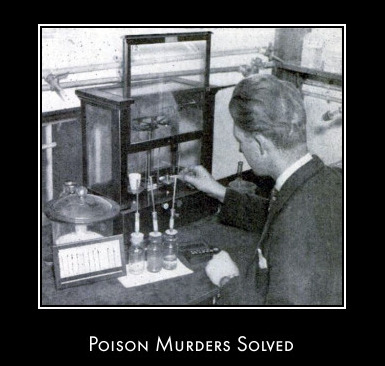 |
| Photo Credit: Forensic |
3.
Forensic Toxicology
It is primarily concerned with the study of isolation and
analysis of drugs and poisons in biological specimens. The interpretation of
the results may help determine the cause of death of an individual in medico-legal context.
4. Clinical Toxicology
 |
| Photo Credit: ClinTox |
This study focuses on the relationship of the toxin and the
disease it may cause to humans. It invloves both diagnostic testing and
therapeutic interventions to evaluate and manage poisoned individuals.
Other Specialized Field of Toxicology:
Environmental Toxicology:
Works on the effects of chemicals on the human environment.
Ecotoxicology: It deals primarily with the transport and fate
of chemicals within an ecosystem.
Regulatory Toxicology: Interprets data form Descriptive
and Mechanistic toxicology to come up with the standards, which are set levels
or concentrations of chemicals which are considered safe or will not pose risk
to public health.
 |
| Photo Credit: FDA |
a. Food
and Drug Administration (FDA) regulates the safety of food, drugs, cosmetics
and food additives.
b. US
Environmental Protection Agency (USEPA) regulates pesticides, waste water from
industry, and air pollution.
c.The Occupational Safety and Health
Administration (OSHA) help establish safe workplaces.
Routes of Exposure:
1.
Ingestion
2.
Inhalation
3.
Transdermal Absorption
|
Toxicity:
|
Acute
|
Chronic
|
|
Exposure
|
Short term
|
Frequent, repeated
exposure for extended periods
|
|
Dose
|
Dose is sufficient
to cause immediate toxic effects
|
Accumulation
of the toxicant or toxic effects
|
Dose – Response Relationship
“the dose makes the poison”
The statement above is attributed
to Paracelsus, a fifteenth-century German
physician who determined that specific chemicals were actually
responsible for the toxicity of a plant or animal poison. He also documented
that the body's response to those chemicals depended on the dose received.
Dose – Response Relationship implies that small
doses of a substance might be harmless or beneficial whereas larger doses
could be toxic.
|
ED0
|
Effective for 0%
population
|
|
ED10
|
Effective for 10% population
|
|
ED50
|
Effective for 50% population
|
|
ED90
|
Effective for 90% population
|
|
TD0
|
Toxic for 0% population
|
|
TD10
|
Toxic for 10% population
|
|
TD50
|
Toxic for 50% population
|
|
TD90
|
Toxic for 90% population
|
Effective
Doses (EDs) are used to indicate the effectiveness of a substance. Normally,
effective dose refers to a beneficial effect (relief of pain). Toxic
Doses (TDs) are utilized to indicate doses that cause adverse toxic effects.
 |
| Photo Credit: Dose - Response |
Toxicology of Specific Agents:
a. Alcohol
b.
Carbon Monoxide
c.
Cyanide
d.
Metals and Metalloids
e.
Pesticides
Toxicology of Therapeutic Drugs:
a.
Salicylates
b.
Acetaminophen
Toxicology of Drugs of Abuse:
a.
Amphetamines
b.
Anabolic Steroids
c.
Cannabinoids
d.
Cocaine
e.
Opiates
f.
Phencyclidine
g.
Sedatives - Hypnotics
Here is an example on how toxins enters our body system. Watch and enjoy :)
Video Credit: Pollution
References:
Bishop et. al, 2010: Clinical Chemistry Techniques, Principles, Correlations, 6th Edition, Lippincott Williams & Wilkins.

No comments:
Post a Comment